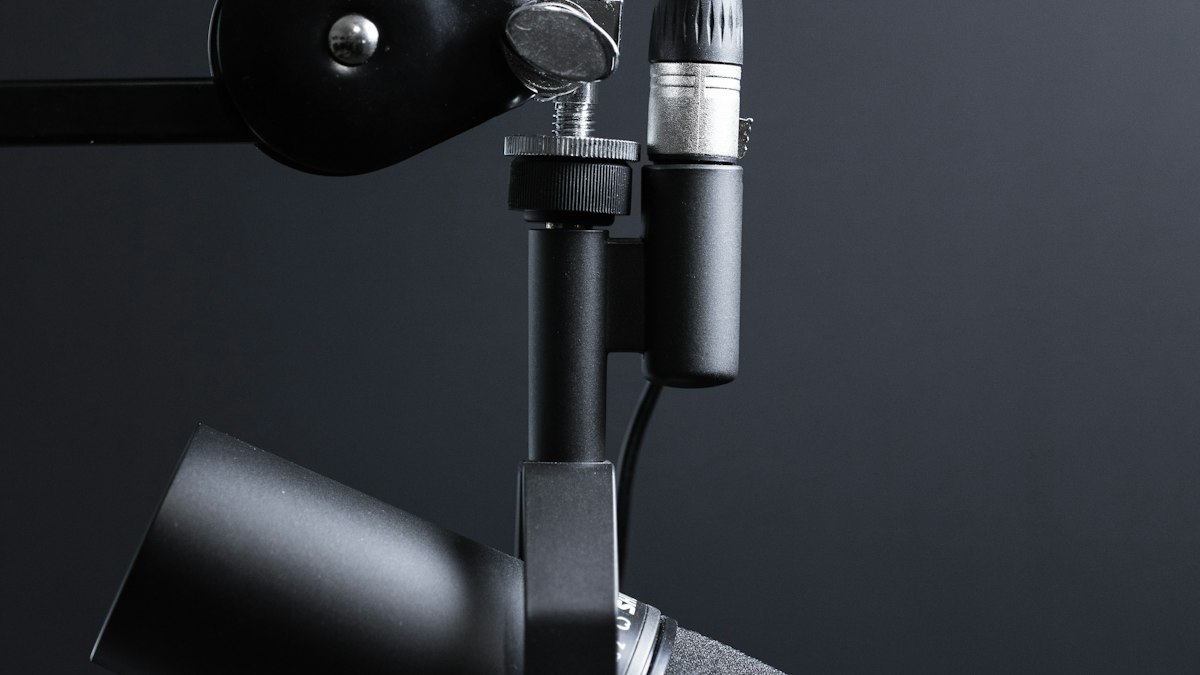
“When the camera light turns red, your body interprets the lens as a predator eye. Master clinical somatic grounding exercises to regulate your nervous system instantly.”
1. The Predator Lens: Why Rational Thinking Fails
Understanding the evolutionary biology of stage fright and camera freeze
You have spent hours researching your topic. You know your script intimately. But the exact instant you press the red record button, your throat constricts, your palms turn cold, and your mind goes entirely blank.
Many creators judge themselves harshly for this: 'Why am I so weak? It is just a phone on a tripod.' But your rational prefrontal cortex is not the organ running the show. Your ancient autonomic nervous system has seized control.
Under Dr. Stephen Porges’ Polyvagal Theory, humans are biologically hardwired to scan the environment for eye contact. A living human face blinks, shifts, nods, and offers micro-cues of safety. A camera lens, by contrast, is an unblinking, circular black aperture. To your primitive brainstem, it resembles the fixed gaze of an apex predator.
Because this reaction occurs at the level of the brainstem, intellectual affirmations ('I am safe, I am good') cannot stop the adrenaline surge. You must communicate with the body in its native somatic language.
Camera fright is not an intellectual defect; it is an ancient evolutionary defense mechanism. To speak calmly on camera, you must regulate your nervous system through physical sensation before engaging cognitive thoughts.
“The body keeps the score before the mind even opens the ledger. If your diaphragm is locked, your voice will never carry calm conviction.”
— Julian Mercer, LMFT, Psy.D.
2. The 3-Step Somatic Reset Sequence
A 90-second clinical protocol to execute immediately before recording
Before opening your camera app or stepping onto a virtual stage, execute this 90-second clinical somatic reset:
Step 1: Bilateral Plantar Anchoring (30 Seconds). Remove your shoes. Stand firmly on the ground with feet shoulder-width apart. Shift your weight from heels to toes, consciously pressing your big toes and heels into the floor. Feel the solid immobility of the foundation beneath you. This anchors proprioceptive feedback.
Step 2: The Double-Inhale Physiological Sigh (30 Seconds). Take a deep nasal inhalation to 80% lung capacity, pause, take a sharp second nasal sniff to completely fill the alveoli, and then exhale slowly through pursed lips for six seconds. Repeat three times. This activates the parasympathetic vagal brake, reducing heart rate within 15 seconds.
Step 3: Gaze Softening & Peripheral Expansion (30 Seconds). Instead of intensely staring at the camera aperture, relax your eye muscles and notice the peripheral room boundaries on your left and right. Expanding your visual field signals safety to the autonomic nervous system.
- 1Perform the Double-Inhale Physiological Sigh before pressing record
- 2Ground your feet firmly into the floor to activate proprioceptive stability
- 3Hum or gently trill your lips for 10 seconds to warm and relax vocal chords
- 4Rehearse the opening 20 seconds in a private simulator without saving or reviewing
3. Local Rehearsal as Systematic Desensitization
How zero-stakes private simulation trains autonomic resilience
In clinical anxiety therapy, the gold standard treatment for phobias is Systematic Desensitization: repeated, gentle exposure to the triggering stimulus in a context of complete safety.
This is precisely what private, on-device rehearsal achieves. When you speak to a camera lens inside a local sandbox with zero danger of public broadcast, your nervous system learns that the red light does not produce social ruin.
With each rehearsal session, the autonomic panic threshold shifts. What once felt like a life-or-death confrontation transforms into a relaxed, authentic conversation between friends.
Frequently Asked Questions
Q:Why does a camera lens trigger a physical panic response?
Under Polyvagal Theory, the human nervous system interprets an unblinking, dark camera lens as a predatory stare, triggering an involuntary autonomic surge of adrenaline, accelerated heart rate, and vocal chord constriction.
Q:What is the 4-7-8 Physiological Sigh?
A fast autonomic brake discovered by neurobiologists: two rapid nasal inhalations followed by an extended, audible oral exhalation. It immediately increases thoracic pressure and triggers the vagus nerve to slow heart rate within seconds.
Q:How does somatic grounding differ from cognitive reframing?
Cognitive reframing works top-down through conscious thought ('Nobody is judging me'), while somatic grounding works bottom-up through physical sensation and breath, signaling safety directly to the brainstem before cognitive anxiety can escalate.
References & Scientific Sources
Porges, S. W. (2007). The polyvagal perspective. Biological Psychology, 74(2), 116-143.
Balban, M. Y., Neri, E., Kogon, M. M., Weed, L., Nouriani, B., Jo, B., Dai, G., Spiegel, D., & Huberman, A. D. (2023). Brief structured respiration practices enhance mood and reduce physiological arousal. Cell Reports Medicine, 4(1), 100895.
Julian Mercer, LMFT, Psy.D.View Bio
Senior Clinical Reviewer & Psychotherapist
Licensed Marriage and Family Therapist and clinical psychotherapist specializing in cognitive behavioral therapy (CBT) and somatic anxiety regulation.